A Partner in Safety
An Interview with an Accountability Program Graduate
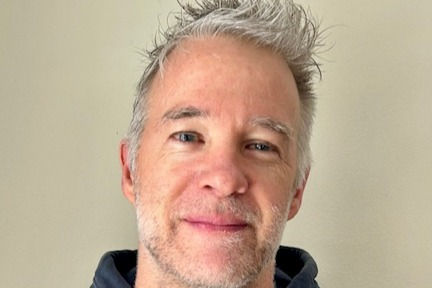
Paul Nadeau is an accountability peer mentor who lives in Newport. He graduated from the Ignite Change Domestic Violence Accountability Program in 2025 and has continued to support the program and use the skills he learned to become an accountability peer mentor. Paul agreed to share some of his thoughts about accountability and the importance of peer mentoring in the following interview with The Spark Connection.
[The Spark Connection] What’s your background with accountability?
[Paul] I was raised in a family of nine, and my parents were strong Christians, so accountability was simply part of everyday life. As I grew older, left home, and started making my own decisions and setting my own rules, some of that accountability slipped away.
Do you think that your understanding of accountability has shifted over the years?
Yeah, it definitely has. When I was younger, accountability meant someone else telling me what I had done wrong and what the consequences would be. As an adult, it became more about deciding for myself what was right and wrong. Today, a lot of people would call that “your own truth.” My understanding has changed from childhood to adulthood, and it continues to grow.
What have been the biggest challenges for you, when it comes to accountability?
More recently, the biggest change has been recognizing my wife as a partner who I sincerely believe loves me. I naturally give more weight to what she says than to someone I don't have a relationship with. There’s a saying: “Nobody cares how much you know until they know how much you care.” I’m much more willing to be held accountable by someone who genuinely loves me. Those relationships allow for honest conversations about where I may not be showing up as my best self.
And has that helped you identify when you need to take accountability for yourself without having someone point it out?
Absolutely. My wife and I intentionally focus on the motives behind our thoughts and how those thoughts eventually become actions. We have a practice we call “taking our thoughts captive.” We simply pause and ask, “What am I thinking right now? What’s the motive behind this thought? What is it trying to lead me toward?” The more you practice accountability, honest conversations, empathy, and genuine care for others, the more those barriers begin to fall away.
How would you define peer mentoring?
I would define peer mentoring as living in a way that others want to live, and then walking alongside them so they can learn to walk that same path.
What started you thinking about becoming a peer mentor?
Even before I went through the Ignite Change program, I was involved in prison ministry. I’m not a pastor. I simply went into the prison, met with groups of men, and asked questions like, “Where is the five-year-old version of you still running the show? Where is the twelve-year-old version of you still making decisions? Where is the version of you from last week still influencing your life today? And how do we change that?” We approached those conversations through a biblical lens.
I think I’m naturally wired to connect with people. Whether it’s at a grocery store, a gas station, or anywhere else, conversations seem to happen naturally. Those everyday interactions often become meaningful discussions, and I think that ability lends itself well to mentoring.
More than anything, I want to help change my community in a positive way. I believe our communities are a reflection of the people who make them. If a community struggles with addiction, poverty, violence, or hopelessness, it’s because individuals are carrying those same struggles. The best way to heal a community is to help heal the people within it.
I’m not the coach, and I don’t pretend to have all the answers. I just want people to know they don’t have to walk alone.
I’m simply saying, “My life used to look like this, and today it looks very different. Let me show you what helped me get here.” I’m not the coach, and I don’t pretend to have all the answers. I just want people to know they don’t have to walk alone.
I’ve lost several friends to suicide. Someone considering suicide is convinced they’re completely alone. I never want anyone I meet to believe that. If nothing else, I want every person I talk with to know there’s at least one person they can reach out to.
What reactions do you get from folks you’re mentoring?
We’ve had men’s groups that started with four or five men and eventually grew to forty. One man invites another, then he brings two or three more. Watching that happen is incredible.
I think what people respond to most is sincere love. The Bible says, “Love covers a multitude of sins.” People carry wounds, trauma, and brokenness for years, but when someone genuinely loves them without expecting anything in return, healing can begin. At first people are skeptical because they’re not used to that kind of love. But underneath that skepticism is a deep desire to be known, valued, and loved.
What do you think you’ve learned along the way as a mentor?
One of the biggest lessons I’ve learned is the importance of slowing down and taking our thoughts captive. I ask, “What’s the motive behind this thought? Where is it leading me?” If a thought is pulling me toward fear, anxiety, depression, or hopelessness, I don’t want to carry it. If it’s leading me toward truth, hope, peace, and life, that’s the direction I want to move.
When people begin thinking about what they’re thinking about, incredible moments of clarity happen. They often trace fears and reactions back to experiences years earlier. Understanding where something began is often the first step toward healing.
What would you say the biggest benefits of being a peer mentor have been for you?
Knowing that I’m doing my part to help my community. Knowing that I’m trying to leave the world better than I found it.
I’ve lived in this area for more than forty years, and I don’t think it has gotten better. Many people complain about the problems around them, but very few become part of the solution. It’s easy to complain about someone who is unhoused or struggling with addiction. It’s much harder to build a relationship and help create a path toward a different life. That’s where real change happens.
Enough complaining. Let’s do something.
That can be scary work. I imagine that’s why so few people do it. What gives you the strength to meet that challenge?
For me, it’s God. Everything changed when I stopped simply believing in God and started following Jesus.
Before that, I was living entirely for myself. I was drinking, chasing relationships, and doing whatever I wanted. My life revolved around satisfying my own desires. Eventually I found myself somewhere I never wanted to be.
That forced me to face myself. I remember sitting alone on the floor of my living room asking, “What did I do to create this situation?” It was as though every selfish and hurtful thing I had ever done came flooding into my mind. For the first time, I saw myself honestly, and I realized I didn’t want to be that person anymore.
Real accountability isn’t about someone standing over you. It’s about someone loving you enough to walk beside you until you can stand on your own.
I reached out to a friend who happened to be a pastor, and that conversation changed everything. He encouraged me to begin reading the Bible. As I read, I became deeply convicted. The more I learned, the more my heart began to change.
I found myself spending time with people I would have judged before. Instead, I began genuinely loving them. Watching God transform my life while also seeing Him transform the lives of others became something I couldn’t get enough of.
When we help people grow, we help our communities grow. If a person can change, a family can change. If families change, communities begin to change. Communities influence states, states influence nations, and ultimately the world changes one life at a time.
For me, it all begins with love.
Real accountability isn’t about someone standing over you. It’s about someone loving you enough to walk beside you until you can stand on your own.